About Us

Birds Connect Seattle invites you to read and learn with us. Together, we'll deepen our understanding of conservation and become stronger advocates for birds and nature.

Learn more about and join our reading group here: https://birdsconnectsea.org/learn/conservation-reading-group/

0 / 4 read (0%)

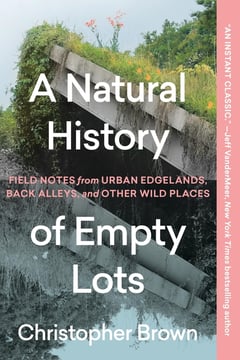
A Natural History of Empty Lots

Field Notes from Urban Edgelands, Back Alleys, and Other Wild Places

Currently reading (summer 2026)

Sign up to read with us

Reflection prompts: 
  1. Share an experience or observation from an "empty lot" or other urban liminal space that surprised you or that you found meaningful.
  2. In the chapter Where the Wild Things Are, the author suggests that our cities are structured by "almost infinite layers of access control" that shape where we can and cannot go. What kinds of barriers—physical, social, economic, or legal—come to mind, and how do they influence your experience of the city? 
  3. How does the author's intentional walks allow him to see nature in a way many others miss? How can we integrate observing nature more into our day to day, even in an urban setting? How would we benefit?
  4. In the chapter Transecologies, the author writes: “The city is a machine that sits on top of wild nature, and every edge where they intersect is also a wound, where the wildness that bleeds through is often extinguished in the process.” How do you interpret the metaphor of the city as a machine and the urban-wild interface as a wound? What examples from your own experience support or challenge this view? 
  5. Where are our opportunities for tending to and enhancing "wastelands" into higher quality habitats?

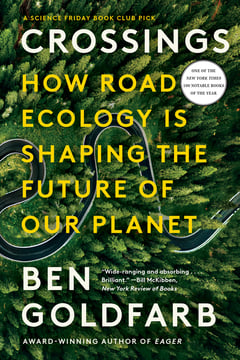
Crossings

How Road Ecology Is Shaping the Future of Our Planet

Spring 2026 pick

Reflections:

Which story or anecdote from Crossings stands out as surprising, poignant, or resonant for you? Why?
We were struck by the evolutionary force that roads have become for Cliff Swallows; by the dedication and empathy of the Portland's "frog taxi" volunteers helping to shuttle Northern Red-legged Frogs across a busy highway built across their migration route between breeding and summer habitats; by the myriad ways in which roads impact people and wildlife and yet how little thought we give to roads and how inevitable and neutral we often believe them to be.

How do you experience or observe the ecological impacts of roads in your daily life?
 We see the impact in roadkill—a flattened gull or pigeon on our city streets; in the roadkill we no longer see—where have all the opossums gone? And why are our windshields void of bug splatter after a long road trip (the so-called "windshield effect" that may signal declining insect abundance); in the worry we feel when letting our children venture outside; in the inescapable noise of living near busy arterials; and in the diversion and pollution of rainwater.

Where/how can we as birders and conservationists apply the lessons from this book? Are there any opportunities in our own neighborhoods?
We can encourage and support pedestrianization efforts around town, such as the pedestrianization of Pike Place Market; we can advocate and mobilize our community to protect the Roadless Rule, which protects millions of acres of public forests from road development; we can seek opportunities to remove roads and car infrastructure in urban areas, taking inspiration from the removal of the parking lot at Schmitz Creek Preserve many years ago; we can support shuttles and speed limits in national parks; we can maintain and enhance access to nature in urban areas to reduce vehicle trips to more sensitive wildlife areas; we can talk to friends and family about the impacts of roads; we can organize and get involved in public processes, for example by volunteering on the Seattle Transit Advisory Board

Highway construction is far more likely to impact low-income neighborhoods and communities of color. Given that, who should lead decisions about urban infrastructure, and what policies or community-driven solutions would help build cities where both people and birds thrive?
Affected communities, tribes, transportation experts, and wildlife biologists should be part of the decision-making process, both for addressing problems with existing infrastructure and for proposed new projects.  The inclusion of wildlife biologists in planning major updates to I-90 through the Cascades, for example, led to significant improvements for wildlife safety and habitat connectivity. By contrast, the routing of I-5 through Seattle's Chinatown/International District was an act of intentional harm to the Asian American community whose effects persist today. 

What questions or concerns arose for you while reading that weren’t answered in the text?
 The role of roads in promoting wildfire was mentioned only in passing. This deserved fuller treatment, especially given that reducing wildfire risk is among the justifications offered for rescinding the Roadless Rule. A more thorough exploration of roads' impacts on human health would have been welcome as well. 
#TitleSubtitleAuthor(s)YearNotes
1A Natural History of Empty LotsField Notes from Urban Edgelands, Back Alleys, and Other Wild PlacesChristopher Brown2025
Currently reading (summer 2026)

Sign up to read with us

Reflection prompts: 
  1. Share an experience or observation from an "empty lot" or other urban liminal space that surprised you or that you found meaningful.
  2. In the chapter Where the Wild Things Are, the author suggests that our cities are structured by "almost infinite layers of access control" that shape where we can and cannot go. What kinds of barriers—physical, social, economic, or legal—come to mind, and how do they influence your experience of the city? 
  3. How does the author's intentional walks allow him to see nature in a way many others miss? How can we integrate observing nature more into our day to day, even in an urban setting? How would we benefit?
  4. In the chapter Transecologies, the author writes: “The city is a machine that sits on top of wild nature, and every edge where they intersect is also a wound, where the wildness that bleeds through is often extinguished in the process.” How do you interpret the metaphor of the city as a machine and the urban-wild interface as a wound? What examples from your own experience support or challenge this view? 
  5. Where are our opportunities for tending to and enhancing "wastelands" into higher quality habitats?
2CrossingsHow Road Ecology Is Shaping the Future of Our PlanetBen Goldfarb2024
Spring 2026 pick

Reflections:

Which story or anecdote from Crossings stands out as surprising, poignant, or resonant for you? Why?
We were struck by the evolutionary force that roads have become for Cliff Swallows; by the dedication and empathy of the Portland's "frog taxi" volunteers helping to shuttle Northern Red-legged Frogs across a busy highway built across their migration route between breeding and summer habitats; by the myriad ways in which roads impact people and wildlife and yet how little thought we give to roads and how inevitable and neutral we often believe them to be.

How do you experience or observe the ecological impacts of roads in your daily life?
 We see the impact in roadkill—a flattened gull or pigeon on our city streets; in the roadkill we no longer see—where have all the opossums gone? And why are our windshields void of bug splatter after a long road trip (the so-called "windshield effect" that may signal declining insect abundance); in the worry we feel when letting our children venture outside; in the inescapable noise of living near busy arterials; and in the diversion and pollution of rainwater.

Where/how can we as birders and conservationists apply the lessons from this book? Are there any opportunities in our own neighborhoods?
We can encourage and support pedestrianization efforts around town, such as the pedestrianization of Pike Place Market; we can advocate and mobilize our community to protect the Roadless Rule, which protects millions of acres of public forests from road development; we can seek opportunities to remove roads and car infrastructure in urban areas, taking inspiration from the removal of the parking lot at Schmitz Creek Preserve many years ago; we can support shuttles and speed limits in national parks; we can maintain and enhance access to nature in urban areas to reduce vehicle trips to more sensitive wildlife areas; we can talk to friends and family about the impacts of roads; we can organize and get involved in public processes, for example by volunteering on the Seattle Transit Advisory Board

Highway construction is far more likely to impact low-income neighborhoods and communities of color. Given that, who should lead decisions about urban infrastructure, and what policies or community-driven solutions would help build cities where both people and birds thrive?
Affected communities, tribes, transportation experts, and wildlife biologists should be part of the decision-making process, both for addressing problems with existing infrastructure and for proposed new projects.  The inclusion of wildlife biologists in planning major updates to I-90 through the Cascades, for example, led to significant improvements for wildlife safety and habitat connectivity. By contrast, the routing of I-5 through Seattle's Chinatown/International District was an act of intentional harm to the Asian American community whose effects persist today. 

What questions or concerns arose for you while reading that weren’t answered in the text?
 The role of roads in promoting wildfire was mentioned only in passing. This deserved fuller treatment, especially given that reducing wildfire risk is among the justifications offered for rescinding the Roadless Rule. A more thorough exploration of roads' impacts on human health would have been welcome as well. 
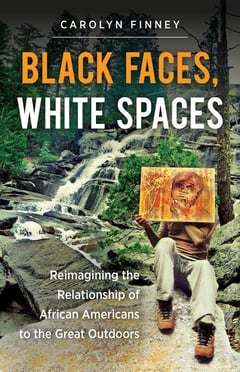
3Black Faces, White SpacesReimagining the Relationship of African Americans to the Great OutdoorsCarolyn Finney2014

Winter 2026 pick

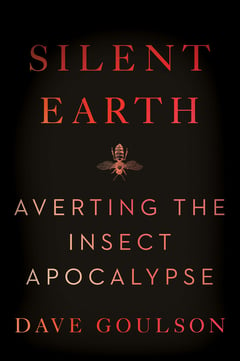
4Silent EarthAverting the Insect ApocalypseDave Goulson2022

Fall 2025 pick